
Fields in Outagamie County Property Tax Records
Several offices shape the local tax picture. Property Listing coordinates the county assessment and tax rolls with assessors, clerks, and treasurers. The Treasurer administers collection and receives county delinquent and postponed real-estate taxes. The parcel layer carries the tax geography, and an Ascent result links a parcel to its assessment and tax functions. Read each entry by year and custodian. Blending them into one value invites errors.
| Field | What It Shows | Where |
|---|---|---|
| Assessed value | Assessment-roll value used in tax calculations | Ascent and local assessor |
| Estimated fair-market value | Ratio-derived estimate shown for tax context | Assessment roll or bill |
| Lottery credit | Credit information maintained with parcel and assessment work | Property Listing and tax record |
| Bill and payment status | Amount due, payment history, or delinquency | Ascent and Treasurer |
| Tax districts | Municipal, school, and vocational context | County parcel layer and bill |
Assessed value, a ratio-derived fair-market estimate, and a recorded sale price are not interchangeable figures. DOR's ratio is an aggregate for a whole taxation district, not a parcel appraisal. For bill amounts and payment routes, the Treasurer's property tax information page is the authoritative source.
Ascent Opens an Outagamie County Tax Account
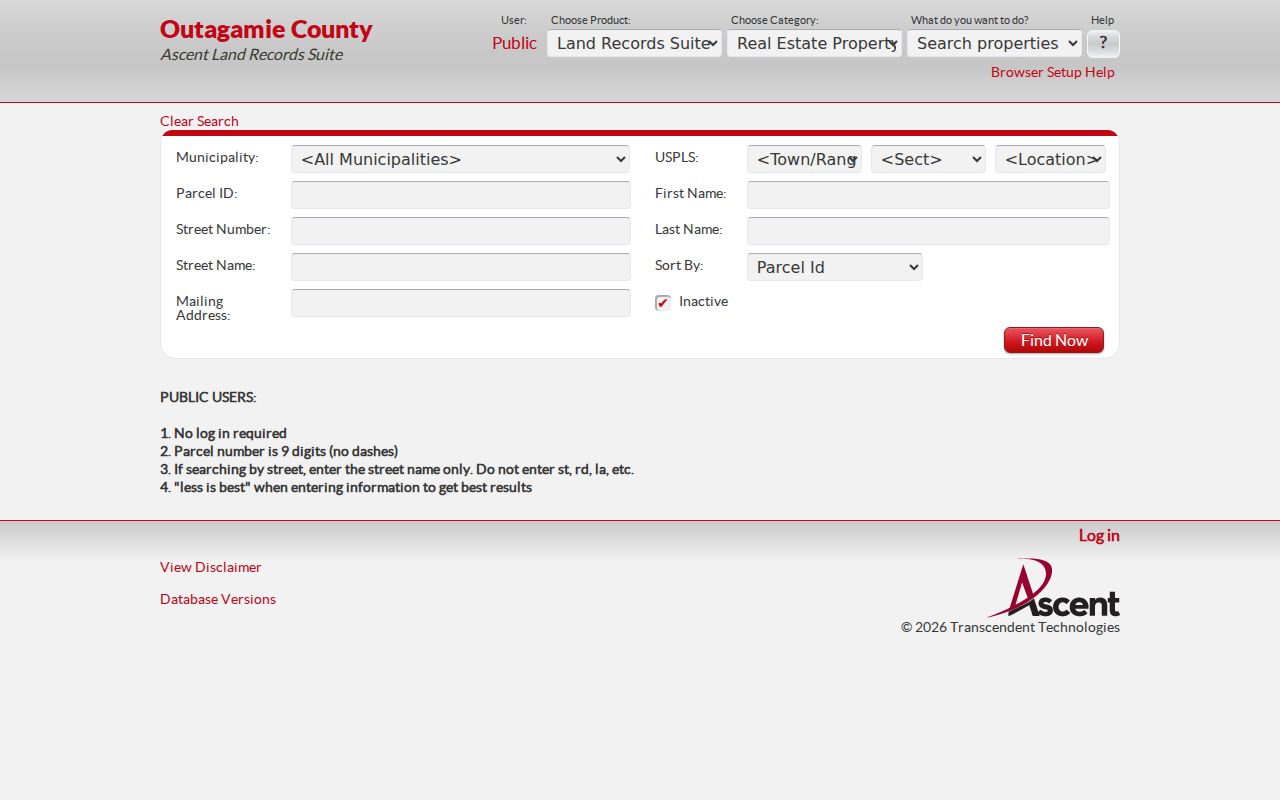
The county's official route runs through Ascent. Search by parcel ID, address, or owner first and last name. Click "Find Now," and select the red parcel number. That parcel task opens current and prior tax-bill and payment functions. Layout can vary, since the public application serves several products. Keep the municipality, parcel number, and tax year with the result. That way payment history matches the correct account. The county's Ascent property and tax parcel portal shows the entry point.
The Treasurer also publishes current tax-bill and delinquent-tax exports. A CSV helps locate an account across many parcels. A bulk file never substitutes for the live account or an updated receipt. Follow the bill's stated payment route. First installments and later payments can go to different treasurers.
Filter the Outagamie County Assessment Roll
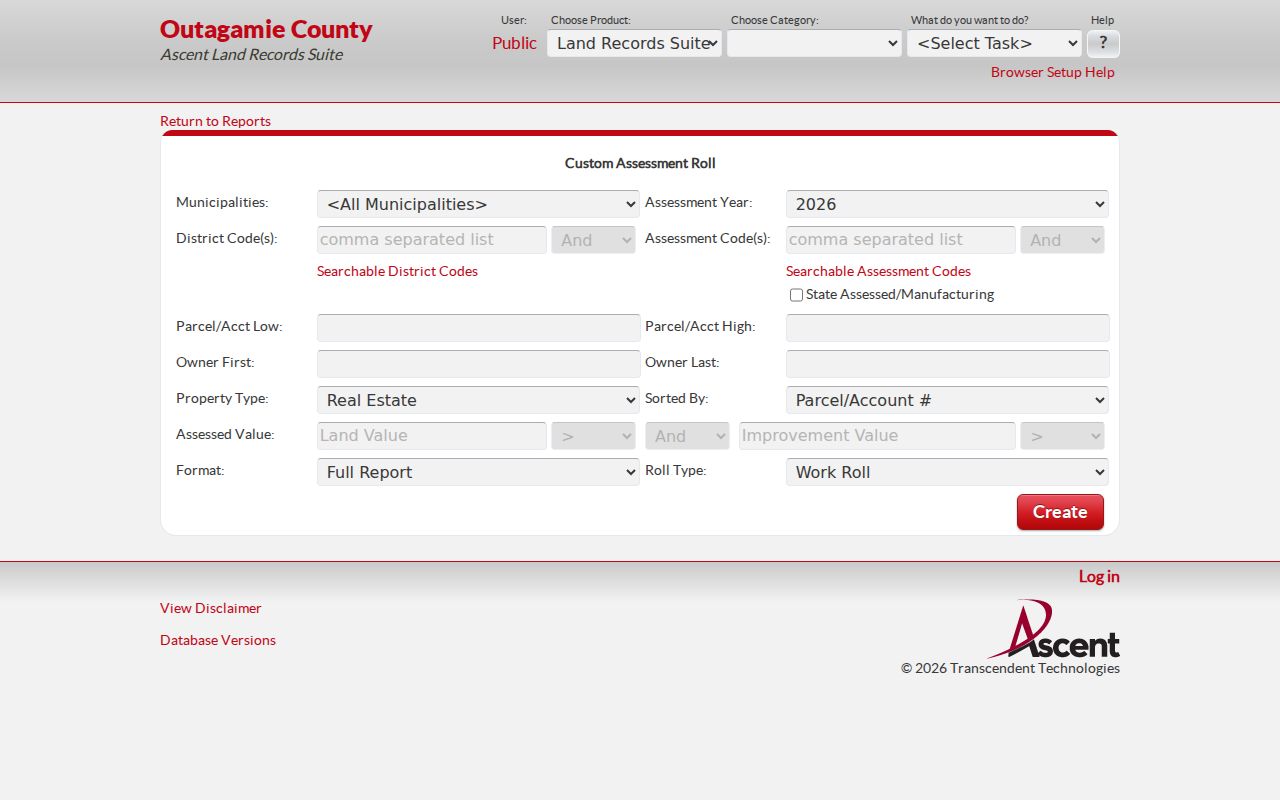
Ascent's custom assessment roll offers more than one way to narrow a report. Visible controls include municipality, assessment year, district and assessment codes, low and high parcel or account ranges, owner first and last name, property type, sort order, roll type, and assessed, land, or improvement value operators. Dropdown choices are dynamic, and the public view does not display every option list at once.
| Roll Filter | What It Narrows | Use |
|---|---|---|
| Municipality and assessment year | Jurisdiction and roll period | Keep local assessment context together |
| Parcel/account low and high | Identifier range | Review a bounded run of accounts |
| Owner first and last | Name text on the roll | Check spelling and entity form |
| Property type and roll type | Category of assessment record | Separate relevant report classes |
| Land and improvement values | Value range operators | Compare the two assessment components |
The Custom Assessment Roll is a county report, not a transaction-price search.
Outagamie Tax Payments Follow Installment Routes
Outagamie County calculates bills for roughly 90,000 parcels, but collection depends on the installment. Follow the current bill for the local treasurer's address and payment instructions on a first installment. Second installments and delinquent balances route to the County Treasurer. The county FAQ confirms this split. Payments may be accepted in person, by mail, deposit box, phone, or online. Terms are subject to the bill and municipality. An escrow arrangement does not remove the owner's responsibility. The owner must confirm the payment was made and credited to the correct parcel. The county also warns that it is not responsible for a payment mailed to the wrong office.
The published 2025 tax instructions set January 31, 2026 for a first installment or full payment. July 31, 2026 is the deadline for the second. The cycle includes a five-working-day grace period. One percent monthly interest applies after February 1 on any unpaid balance. Those dates apply to that cycle only. Use the live Treasurer page and the current tax bill for the next one. The 2025 online fee schedule listed $1.50 for e-check, $3.50 for debit, and 2.5 percent for credit cards. Confirm the processor's current charge before submitting payment.
Find an Outagamie County Tax Bill
Use the parcel number when possible. If it is unknown, search the address or owner through the county's Ascent instruction. Choose the parcel result from that search. Check the tax year, installment, payment status, and mailing address. The assessment record can show lottery-credit and value context. But follow the bill's own payment directions rather than inferring which treasurer holds an installment.
For broader account review, the Treasurer also publishes a current-tax CSV and a delinquent-tax export. Use an export to locate a parcel or compare a group. Then verify the account and payment status in the live system or with the Treasurer. Do this before relying on a saved file. The bill identifies the municipality and installment route. A payment sent to the wrong treasurer can still cause problems. That holds even when the address is familiar. Keep the tax year and parcel ID with any export result.
- Search Ascent by parcel ID, address, or owner first and last name.
- Choose the red parcel number and select the tax task for the parcel.
- Compare the current bill with prior-year payment history and the tax year printed on each result.
- Check the municipality and installment instructions before sending payment.
- If the account is delinquent, use the county export and Treasurer contact to verify the balance.
- Assessed value
- The municipality's parcel assessment used in tax calculations.
- Tax levy
- The amount raised for a taxing body; it is not the parcel's sale price.
- Lottery credit
- A credit field maintained in the county's parcel and assessment work.
- Delinquent tax
- A balance unpaid past the applicable due date.
Historic Outagamie Tax Rolls Have Three Repositories
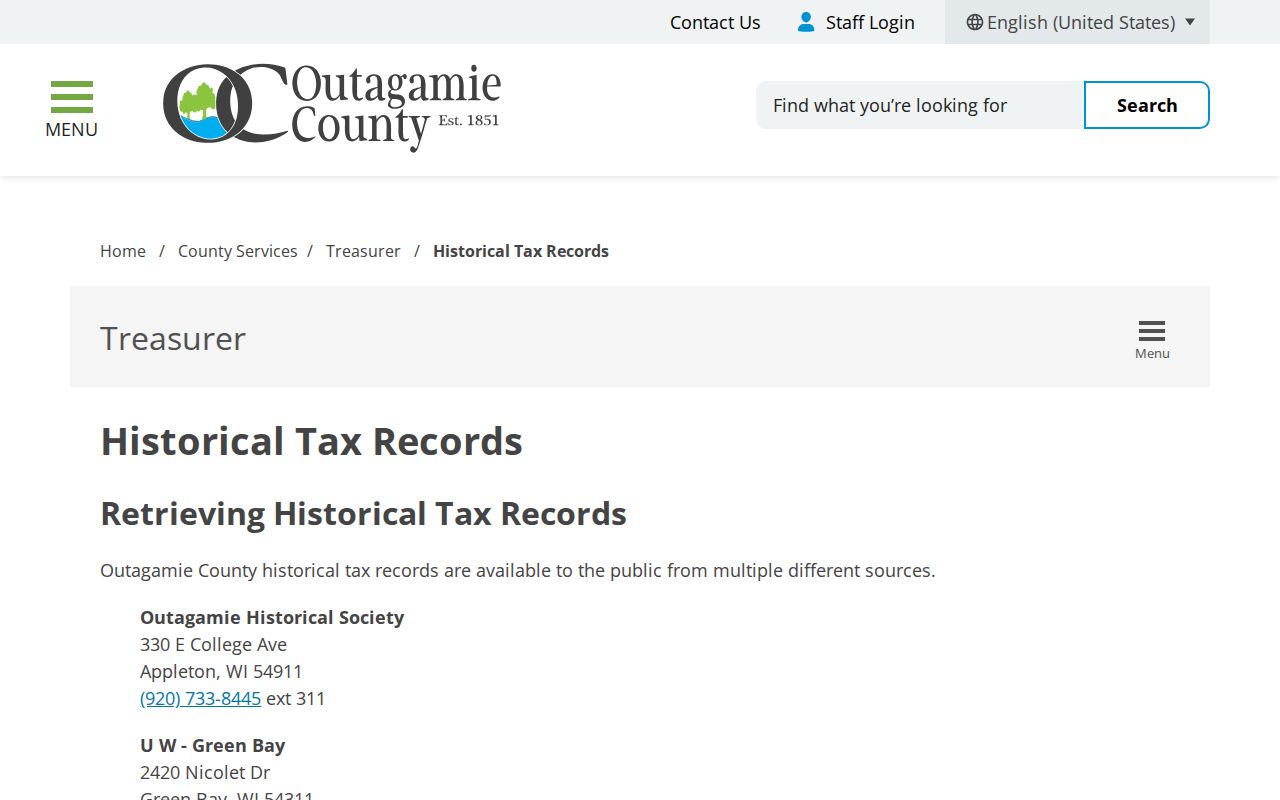
Older Outagamie County tax rolls live in three places. The Treasurer points historical researchers to three routes. These are its own office, the Outagamie Historical Society, and UW–Green Bay. Digitized material also sits in a linked University of Wisconsin digital collection. Formats and year coverage vary from one repository to the next. The county credits the Historical Society with assessment records for a set number of years. However, it gives no single combined span across all three holdings. Call ahead before you travel. Ask which municipality and tax year you need. Have the parcel number ready. Confirm whether the source is an original roll, an image, an index, or microfilm. Remember that an old entry shows assessment or ownership context for its year only. It is not a recorded conveyance. It also says nothing about a current balance. The county's official historical-tax directions name all three routes.
Delinquent Outagamie County Property Tax Records
Delinquent Outagamie County property tax records start with the Treasurer. That office collects county delinquent and postponed real-estate taxes and runs the in-rem foreclosure process for severely delinquent parcels. The county publishes a delinquent-tax export and a current tax-bill CSV. A delinquency line is only a lead. It does not mean the property is for sale or that title has moved. Before you describe any transfer, look for an in-rem record, a court matter, and a later deed in the deed records.
For the 2025 tax cycle, the county applied a 1% monthly charge to unpaid balances starting February 1 under Wis. Stat. §74.47(1), with five working days of grace under §§74.11(7) and 74.12(7). Rely on current bill terms for any balance you need today. The county's municipal resources page also carries material on delayed assessment chargebacks and refunds.
Assessment Ratios Explain Outagamie Tax Values
An assessment ratio, as Wisconsin DOR defines it, is the assessed value of a district divided by the department's full value for that taxation district. Your tax bill carries an estimated fair-market value built from the assessed value and an average ratio. That figure is not a private appraisal. It is also not the price printed on a deed. DOR publishes aggregate ratios by municipality in its annual statistical reports, which matters in a county split among cities, villages, and towns.
Keep the assessor's land, improvement, and total values separate from the taxes due. School and vocational district fields on the parcel layer help explain the levy context behind a bill, though they never name a title owner. Deeper detail on what an assessment number means appears in the Outagamie County property-value reference.
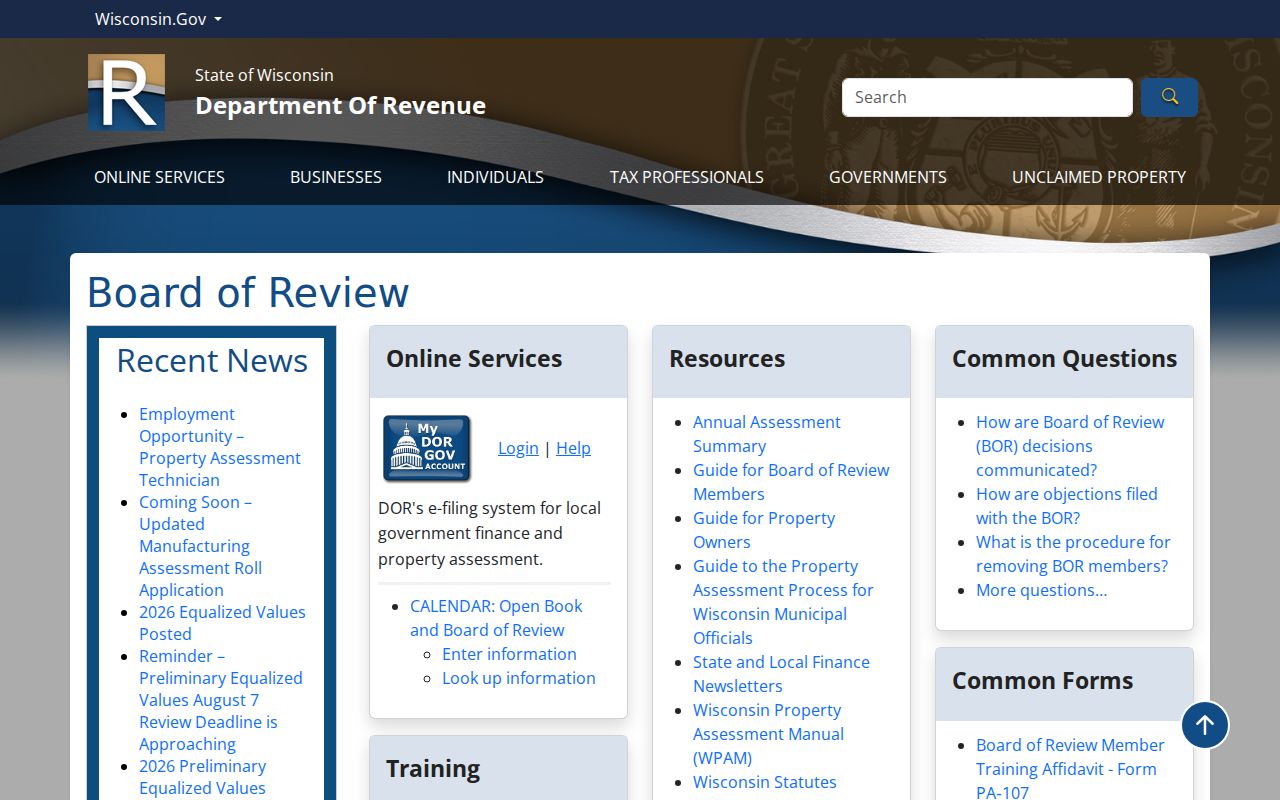
Objection forms and appeal procedure are linked from the Wisconsin DOR Board of Review page.
Challenge an Outagamie County Assessment
Every assessment objection in Outagamie County begins locally. Start with the local assessor's Open Book and Board of Review schedule. The municipality's notice fixes the date. No statewide guide can supply one calendar date for every parcel. Pull the assessment notice and property details first. Gather evidence tied to the assessed features or comparable sales. Then follow the local objection instructions and file the required DOR forms where they apply.
Appeal window. Wisconsin guidance requires at least seven days between Open Book and the Board of Review meeting. Check the municipal notice for the actual schedule, file the objection as directed, and retain the written determination.